Book, Book Chapter, Design Experiments, Empirical Research

Bridging the Gap: Computational Literacy Beyond Computer Science

In today’s rapidly evolving world, computational literacy is no longer confined to computer science classrooms. It’s time we explore how these skills can enhance learning across all subjects, including language arts.

I’m excited to share insights from the 17th chapter of our recent book Creating Design Knowledge In Educational Innovation, where I explore how computational literacy can transform learning across all subjects—not just computer science.

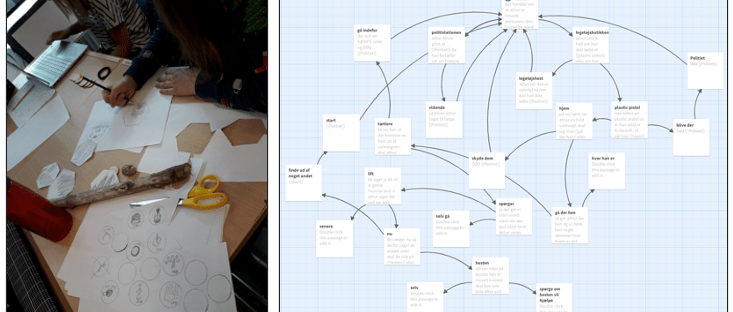
In my chapter, Designing for Computational Literacy in Non-CS Subjects, I explore how computational literacy can be integrated into non-CS subjects like language arts. I share som insights from a case: The Horrible Hand, where pupils combine storytelling with computational tools like Twine to craft interactive, multimedia stories. This approach deepened their understanding of narrative structures and enhanced their creativity and collaboration skills.

By integrating computational methods into different subject areas, we unlock new learning possibilities for students. This leads us to important questions:

💡 How can we make computational literacy accessible and meaningful across diverse subjects?

💡 What new literacies can emerge when we blend computational tools with traditional teaching methods?

💡 How can this empower students to engage in deeper, more meaningful learning?

The future of education is cross-disciplinary and integrative—and my chapter highlights these opportunities.

Book Chapter, Design Experiments, Publication

LINKING DESIGN PRINCIPLES TO CONTEXT AND EVIDENCE

A Semantic Web Approach

Book Chapter, Publication

New publication on Multimodality

Today I received my copy of the new handbook “Erhvervsdidaktisk opslagsbog” [Roughly translated: “Handbook for Vocational School” Didactics].
Together with my good colleague Dorthe Carlsen, I wrote a piece on “Multimodality” and multimodal learning design.
The book contains 58 chapters from 44 authors covering the fundamental concepts and issues concerning the vocational education.
I hope you will enjoy reading it.

Book Chapter

THE CYBER WEAPON

Computational Literacy in Scenario-Based Teaching Practices

Today I contributed with a chapter for a new Danish handbook on Scenario-based Teaching.
The purpose of the chapter is to contribute to the field of scenario-based teaching and computational literacy as an emerging field in primary school. I do this by exemplifying a concrete and tested scenario fragment where the students solve an educational escape puzzle through analysis and manipulations of technologies. The activity forms the starting point for a close investigation of students’ computational problem-solving strategies, as a focal point in computational literacy. The analysis is based on a socio-cultural view seeing tangible artifacts as mediating tools for actions unfolding in the given practice. From here the chapter deals with computational issues and the significance of artifacts as mediators for scenario-based activities that have computer literacy as part of the subject domain. A specific emphasis here is on the opportunities for socio-epistemic negotiations, the tangible artifacts creates. On a more practical level, the article seeks to deliver a well-described example that can inspire practitioners and support pedagogical decisions when designing for computational literacy.

The book is in danish, and can be found here:
https://www.saxo.com/dk/haandbog-i-scenariedidaktik_bog_9788772196442